

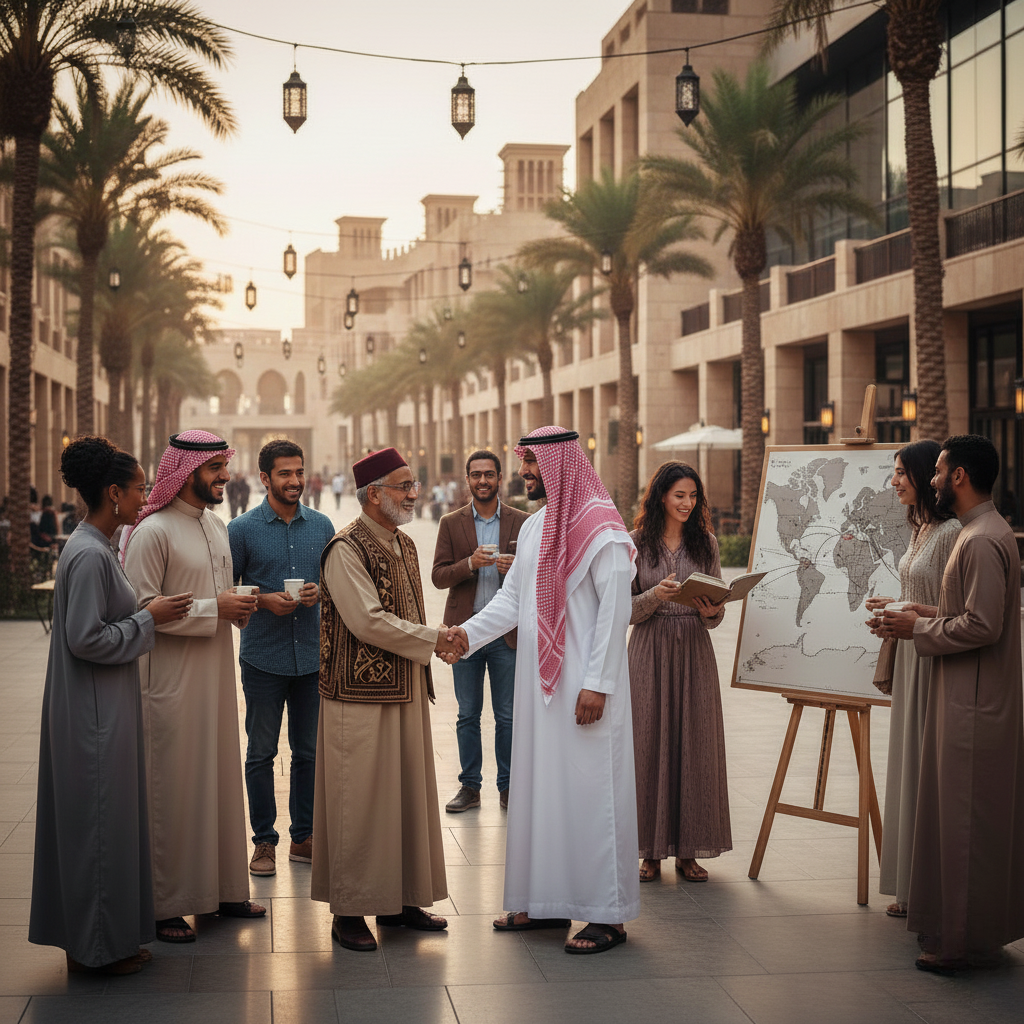
The focus? A compelling theme: "Alliance of Civilizations: Two Decades of Dialogue for Humanity – Ushering in a New Era of Mutual Respect and Understanding in a Multipolar World." It's a phrase that resonates deeply in our interconnected, yet often fragmented, global landscape. Tunisia, through its representative, is here to lend its voice, its perspective, and its unwavering commitment to this vital cause.
This gathering is a beacon of hope, a chance to reflect on past achievements, and a crucial platform to chart a course for a more harmonious future for all.
الوفد التونسي في الرياض: سفراء الحوار والتفاهم
The presence of Minister of Foreign Affairs, Migration and Tunisians Abroad, Mr. Mohamed Ali Nafti, at the head of the Tunisian delegation is no mere coincidence. It's a deliberate and strong signal of Tunisia's unwavering dedication to the principles of multilateralism and intercultural dialogue. This isn't just about representing Tunisia; it's about embodying its long-held values of openness, tolerance, and respect for diversity.
The delegation's participation is a direct mandate from the President of the Republic, Kais Saied, underscoring the strategic importance Tunisia places on this forum. It's a commitment that transcends political shifts, rooted in a deep understanding that the strength of nations lies not in isolation, but in their ability to connect, to understand, and to build bridges across cultural and civilizational divides.
This isn't just a formal delegation; it's a tapestry woven with the threads of Tunisian diplomacy, a testament to its role as a bridge between cultures. Their presence in Riyadh is a clear message: Tunisia is a proactive partner in the global pursuit of peace and understanding. Prepare to witness Tunisia's voice amplified on the international stage, advocating for a world united by common values and shared aspirations.
نداء الرياض: عقود من الحوار من أجل الإنسانية
The theme itself, "Alliance of Civilizations: Two Decades of Dialogue for Humanity," speaks volumes. It's a reflective glance back at twenty years of persistent efforts to foster understanding and build bridges. It's a recognition that while challenges have been many, the pursuit of dialogue has yielded significant fruits in promoting peace and security globally.
The forum serves as a vital platform to evaluate the journey of **intercultural dialogue** and assess its impact over the past two decades. It's an opportunity to learn from successes, identify shortcomings, and refine strategies for the road ahead. The ongoing commitment to this dialogue is not just an abstract ideal; it's a practical necessity for navigating the complexities of our modern world.
The focus on "ushering in a new era of mutual respect and understanding in a multipolar world" is particularly poignant. In an era where global power dynamics are shifting, fostering genuine mutual respect becomes paramount. This isn't just about diplomatic niceties; it's about building a foundation of trust upon which lasting peace and cooperation can be built. The Saudi capital is set to become the crucible where these crucial conversations will shape the future of global relations.
لماذا تحالف الأمم المتحدة للحضارات؟
The establishment of the Alliance of Civilizations by the UN was a response to a growing need. It recognized that many global conflicts and misunderstandings stem from cultural and religious divides, often exacerbated by misinformation and prejudice.
Its core mission is to promote understanding and respect among diverse peoples and cultures. This isn't about homogenizing cultures, but about celebrating their richness while finding common ground in shared human values. It's a proactive approach to prevent conflict before it starts.
The UNAOC operates on the premise that dialogue is the most potent tool in combating extremism and fostering a sense of global citizenship. By bringing together diverse stakeholders, it aims to build trust and facilitate cooperation on issues of mutual concern. This has become increasingly critical in our interconnected yet volatile world.
https://via.placeholder.com/600x400?text=Symbolic+Image+of+Global+Dialogue
The choice of Riyadh as the host city for this significant event is symbolic. Saudi Arabia, a nation at the crossroads of ancient civilizations and a modern global player, offers a unique backdrop for discussions on **cultural exchange** and **interfaith dialogue**.
The event is not just a conference; it's a strategic convergence of global leaders, policymakers, academics, and civil society representatives. They gather to dissect the complexities of our multipolar world and explore innovative solutions for peace and mutual understanding. This shared purpose fuels the collaborative spirit that is essential for tackling global challenges.
The presence of the Minister of Foreign Affairs of the Kingdom of Saudi Arabia and the UN Under-Secretary-General, High Representative for the Alliance of Civilizations, and Special Envoy of the UN for Combating Islamophobia, signifies the high-level commitment and strategic importance attached to this forum. It's a testament to the shared vision of fostering a world where differences are appreciated, not feared.
تونس في قلب الحوار: دور رئيسي في عالم متغير
Tunisia's participation is deeply rooted in its own rich history and its unwavering commitment to democratic values and human rights. The nation has long been a beacon of moderation and a proponent of peaceful coexistence in the Mediterranean region and beyond.
The country's proactive engagement in international forums like the UNAOC reflects its understanding that global peace and security are intrinsically linked to **intercultural understanding**. Tunisia has consistently championed the cause of dialogue as a cornerstone of diplomacy and a vital tool for conflict prevention. Its voice carries weight, informed by experience and a genuine desire for global harmony.
Minister Nafti's leadership of the delegation underscores Tunisia's readiness to contribute actively to shaping the global narrative on **civilizational dialogue**. It's a chance to share its unique perspective, learned through its own diverse experiences, and to collaborate with other nations in building a more inclusive and respectful world order. Tunisia's participation is not just symbolic; it's a call to action for a more unified global community.
مواجهة خطاب الكراهية: معركة العصر الرقمي
One of the most pressing challenges addressed at the forum is the rise of hate speech and extremism. In the digital age, these harmful ideologies can spread like wildfire, undermining social cohesion and fueling conflict.
The UNAOC provides a crucial platform for discussing effective strategies to combat this menace. This includes promoting media literacy, fostering critical thinking, and supporting initiatives that counter divisive narratives online and offline. It's a battle that requires a united front and innovative solutions.
The forum aims to explore concrete measures to counter the proliferation of hate speech and promote values of understanding and mutual respect. This is not merely a theoretical discussion; it's about developing actionable plans that can be implemented globally to safeguard our societies from the corrosive effects of intolerance and prejudice. This pursuit of **mutual respect** is at the heart of the UNAOC's mission.
https://via.placeholder.com/600x400?text=Collage+of+Diverse+Cultures+and+Symbols
The **Alliance of Civilizations** initiative has been instrumental in bringing together diverse stakeholders. It fosters a collaborative environment where governments, international organizations, civil society, and the private sector can work together to address complex global issues.
This collaboration is essential for developing holistic and sustainable solutions. By pooling resources, expertise, and perspectives, participants can create more impactful initiatives that resonate across different cultures and communities. The synergy generated by such diverse partnerships is key to achieving lasting change.
The ongoing work of the UNAOC is more critical than ever. As the world grapples with geopolitical shifts, economic disparities, and the persistent threat of conflict, the alliance's focus on dialogue, understanding, and mutual respect offers a vital pathway towards a more peaceful and prosperous future for all humanity.
التحولات العالمية: فرصة للتضامن الإنساني
The world is in constant flux, characterized by rapid transformations that present both challenges and opportunities. From technological advancements to evolving geopolitical landscapes, these shifts demand adaptability and a renewed commitment to global cooperation.
The forum in Riyadh serves as a vital space to discuss these global challenges. It's an opportunity to collectively analyze the impact of these transformations and to identify pathways that foster coexistence and human solidarity. The shared responsibility for shaping a better future is at the forefront of these discussions.
The **United Nations Alliance of Civilizations** recognizes that these transformations can either deepen divisions or pave the way for unprecedented cooperation. The proactive engagement of nations like Tunisia is crucial in steering this process towards the latter, reinforcing the idea that shared challenges require shared solutions and a commitment to **interfaith harmony**.
التعايش والتضامن: ركائز السلام المستدام
At the heart of the UNAOC's mission lies the promotion of coexistence and human solidarity. These are not abstract concepts, but the very foundations upon which sustainable peace can be built. In a world often defined by divisions, fostering these elements is paramount.
The forum delves into practical strategies for enhancing these values. This includes fostering educational programs that promote empathy, supporting community initiatives that bridge divides, and encouraging cross-cultural exchanges that break down stereotypes. The goal is to cultivate a global culture of understanding.
The discussions at the forum aim to strengthen the spirit of prevention of conflicts and to entrench a culture of peace. This involves moving beyond reactive measures to proactive strategies that address the root causes of conflict. By fostering solidarity, the alliance seeks to build a world where peace is not just the absence of war, but the presence of justice, understanding, and mutual respect.
https://via.placeholder.com/600x400?text=People+from+different+backgrounds+shaking+hands
The pursuit of **dialogue for humanity** is a long-term endeavor. It requires sustained commitment, open minds, and a willingness to engage with those who hold different perspectives. The UNAOC is dedicated to this ongoing process, recognizing its vital role in shaping a more peaceful world.
The past two decades have shown the profound impact that focused efforts on **cultural understanding** can have. By investing in dialogue, we invest in the future, creating a more resilient and harmonious global society capable of overcoming challenges and seizing opportunities.
The forum's emphasis on a "new era" signifies a forward-looking approach. It's about learning from the past, embracing the present realities of a multipolar world, and actively building a future where respect, understanding, and cooperation are the norm, not the exception. This forward momentum is critical for progress.
الندوة التونسية: خطوة تحضيرية نحو الرياض
Tunisia's commitment to the UNAOC's goals is further exemplified by the international conference it hosted on November 17th. This event, focused on "Activating the Role of the United Nations Alliance of Civilizations in Supporting International Peace and Security," was a crucial preparatory step for the Riyadh forum.
The conference served as a vital platform for brainstorming and crystallizing a shared vision. It brought together experts and stakeholders to deliberate on how to enhance the alliance's effectiveness in addressing contemporary challenges. This proactive approach demonstrates Tunisia's dedication to tangible outcomes.
The outcomes of Tunisia's preparatory conference played a significant role in shaping the agenda and the expected contributions to the Riyadh forum. This demonstrates a strategic and coordinated effort, ensuring that Tunisia's participation is not only symbolic but also substantive and impactful. This preparation is key for meaningful contributions.
بلورة رؤية مشتركة: نحو تعزيز الدور الحضاري
The preparatory conference in Tunisia was instrumental in crystallizing a shared vision for strengthening the role of civilizational alliances. It brought together diverse perspectives to brainstorm innovative approaches.
The discussions focused on identifying actionable strategies to enhance the alliance's impact. This included exploring new methodologies for dialogue and cooperation in an increasingly complex global landscape. The aim was to ensure relevance and effectiveness.
This collaborative effort in shaping a common vision is crucial for the success of the UNAOC. It ensures that the alliance remains a dynamic and responsive force, capable of addressing evolving global challenges and promoting a culture of peace and understanding worldwide. Such a shared vision is the bedrock of collective action.
https://via.placeholder.com/600x400?text=Hands+holding+a+globe+with+different+flags
The **United Nations Alliance of Civilizations** is more than just a forum; it's a commitment to building a better world. Through dialogue, mutual respect, and a shared understanding of our common humanity, we can navigate the complexities of our multipolar world.
The journey of dialogue, spanning two decades, has shown us the power of connection. As we move forward, the lessons learned and the partnerships forged will guide us towards an era of unprecedented **intercultural cooperation** and lasting peace.
Tunisia's leading role in this endeavor, spearheaded by Minister Nafti, is a testament to its enduring commitment to these vital principles. The discussions in Riyadh will undoubtedly pave the way for a stronger, more united global community, ready to face the future with hope and determination.
خارطة طريق المستقبل: دروس مستفادة وتطلعات
Looking ahead, the forum in Riyadh is not just an endpoint but a crucial stepping stone. It’s a moment to consolidate the gains of the past two decades and to chart a clear roadmap for the future. The insights and commitments generated here will be vital in guiding the alliance's work.
The **multipolar world** presents unique challenges, demanding innovative approaches to **global diplomacy**. The UNAOC's role in facilitating dialogue becomes even more critical as nations navigate complex interdependencies and diverse interests. The future hinges on our ability to collaborate effectively.
Future initiatives will likely focus on leveraging technology for broader reach, engaging youth more effectively, and strengthening partnerships with civil society organizations. The aim is to ensure that the message of respect and understanding permeates every level of society, fostering genuine **humanistic dialogue**.
تحديات وتوصيات: ما وراء الحوار
While the forum celebrates progress, it also acknowledges the persistent challenges. The rise of polarization, the impact of misinformation, and the lingering effects of historical grievances require continuous attention and dedicated strategies.
Recommendations emerging from the forum will likely focus on practical, implementable solutions. This could include greater investment in educational programs that promote intercultural competence, the development of stronger frameworks for combating online hate speech, and initiatives to support vulnerable communities impacted by conflict and intolerance.
The **Alliance of Civilizations** aims to foster a proactive approach to peacebuilding. By addressing the root causes of division and promoting a culture of empathy, the forum seeks to lay the groundwork for a more stable and harmonious global order. The commitment to **intercultural respect** is the guiding principle for these efforts.
https://via.placeholder.com/600x400?text=A+diverse+group+of+people+working+together+on+a+project
The impact of such forums extends far beyond the conference halls. They create ripple effects, inspiring action and fostering a sense of shared responsibility across communities. The **United Nations Alliance of Civilizations** acts as a catalyst for positive change on a global scale.
By investing in dialogue and mutual understanding, we are essentially investing in our collective future. The **cultural understanding** fostered here is a powerful antidote to the forces of division and extremism that threaten global stability.
The leadership shown by Tunisia, with Minister Nafti at the helm, is a beacon of hope. Their active participation in Riyadh signifies a commitment to building bridges and fostering an environment where all voices are heard and respected. This dedication is crucial for navigating the complexities of our interconnected world and for advancing the cause of humanity.
تطلعات تونسية: نحو عصر جديد من التعاون
Tunisia arrives in Riyadh with a clear vision: to contribute actively to building a new era of mutual respect and understanding. This vision is deeply embedded in the nation's identity as a bridge between cultures and a proponent of democratic values.
The delegation's agenda is focused on practical contributions, aiming to share Tunisia's experiences and learn from others. The goal is to forge stronger partnerships and develop concrete strategies for promoting **intercultural dialogue** and cooperation in a rapidly changing world.
The forum represents a significant opportunity for Tunisia to reaffirm its commitment to multilateralism and its role as a responsible global citizen. By actively participating in these crucial discussions, Tunisia aims to help shape a more inclusive and peaceful international order, reflecting its core values of openness and respect for diversity.
الرياض كمنصة للحوار: إرث ثقافي ورؤية مستقبلية
Hosting this prestigious event in Riyadh is a powerful statement by Saudi Arabia. It underscores the Kingdom's commitment to fostering dialogue and promoting peace on the global stage.
The city of Riyadh, steeped in history and at the heart of a region with a rich tapestry of cultures, provides a fitting backdrop for discussions on **civilizational understanding**. Its strategic location and its growing role in international affairs make it an ideal venue for such a critical summit.
The convergence of global leaders in Riyadh is a testament to the shared understanding that dialogue is not a luxury, but a necessity. The outcomes of this forum will undoubtedly shape future efforts to build a more harmonious and cooperative world, reinforcing the principles of **mutual understanding**.
https://via.placeholder.com/600x400?text=United+Nations+logo+with+diverse+hands+around+it
The **Alliance of Civilizations** initiative, with its focus on **intercultural dialogue**, remains a cornerstone of the UN's efforts to promote peace and security. The participation of Tunisia, led by Minister Nafti, is a vital component of this ongoing endeavor.
As the world navigates the complexities of a multipolar landscape, the principles championed by the UNAOC—respect, understanding, and cooperation—offer a guiding light. The discussions in Riyadh are a crucial step in realizing this vision for a more harmonious global future.
The journey of dialogue is a continuous one, and Tunisia's presence at the forefront of this movement is a source of inspiration. The commitment to building bridges and fostering mutual respect will continue to define our collective path forward, ensuring a legacy of peace for generations to come.
قائمة بأبرز محاور المنتدى وأهدافه
The International Forum of the United Nations Alliance of Civilizations is a pivotal platform for global discourse. It brings together leaders and stakeholders to address the most pressing issues facing our world today. Here are some of the key objectives and discussion points:
- Promoting Intercultural Dialogue: To foster understanding and respect among diverse cultures and civilizations, recognizing their inherent value and contribution to humanity. This involves creating safe spaces for open and honest conversations, bridging divides, and building trust between communities.
- Combating Hate Speech and Extremism: To develop and implement effective strategies for countering divisive narratives and ideologies that fuel intolerance and conflict. This includes promoting media literacy and critical thinking skills to help individuals discern misinformation.
- Strengthening Peace and Security: To explore the role of the Alliance in supporting international peace and security by addressing the root causes of conflict, such as prejudice and misunderstanding. Proactive conflict prevention is a key focus.
- Fostering Human Solidarity: To encourage a sense of shared responsibility and cooperation among nations and peoples, especially in the face of global challenges like climate change, pandemics, and economic inequality.
- Building a Multipolar World Order Based on Respect: To adapt the principles of the Alliance to the realities of a changing global landscape, emphasizing mutual respect and understanding in international relations. This acknowledges the shift towards a more complex global power structure.
- Celebrating Cultural Diversity: To highlight and celebrate the richness and diversity of human cultures as a source of strength and innovation, rather than a cause for division. This involves showcasing cultural heritage and promoting cross-cultural exchange.
- Engaging Youth: To empower young people as agents of change and future leaders in promoting peace and intercultural understanding. Youth-led initiatives and educational programs are crucial for long-term impact.
- Leveraging Technology for Dialogue: To explore innovative ways in which technology can be used to facilitate dialogue, share information, and connect people across borders, while mitigating the risks of its misuse for spreading hate.
- Enhancing Partnerships: To strengthen collaboration among governments, international organizations, civil society, the private sector, and academic institutions to achieve the Alliance's goals more effectively.
- Evaluating Progress and Setting Future Agendas: To assess the achievements of the Alliance over the past two decades and to set ambitious yet achievable goals for the future, ensuring its continued relevance and impact.
The discussions at this forum are not just about understanding the past but about actively shaping the future. Tunisia's participation, led by Minister Nafti, is a testament to its commitment to these crucial objectives. The **United Nations Alliance of Civilizations** provides the framework, but the collective will of nations drives the progress.
حوار الثقافات: رحلة عبر العصور
The concept of dialogue between cultures and civilizations is not new. It's a thread that runs through human history, from ancient trade routes that fostered exchange to modern-day initiatives promoting global understanding. The UNAOC builds upon this rich legacy.
For centuries, civilizations have interacted, influencing each other through trade, art, philosophy, and science. This interaction, often marked by periods of both conflict and cooperation, has shaped the world we live in today. Recognizing this historical interconnectedness is key to fostering future harmony.
The forum provides an opportunity to reflect on these historical interactions and draw lessons that can inform contemporary **intercultural understanding**. Understanding where we come from helps us navigate where we are going, building on past successes and learning from past mistakes. This historical perspective is vital for progress.
https://via.placeholder.com/600x400?text=Ancient+scrolls+and+modern+tablets+side+by+side
The journey of **intercultural dialogue** has been long and often challenging. However, the persistence of such efforts underscores their fundamental importance for human progress and peaceful coexistence. The UNAOC represents a modern, institutionalized commitment to this enduring human endeavor.
The forum in Riyadh is a testament to the enduring belief that dialogue is the most effective tool for building bridges and resolving differences. It's a call to embrace our shared humanity and work together towards a more peaceful and just world.
Tunisia's active role, championed by Minister Nafti, highlights its commitment to this historical imperative. The nation's dedication to fostering understanding reflects its own deep-rooted cultural heritage and its forward-looking vision for global cooperation.
أهداف المنتدى: بناء جسور التفاهم
The core objective of the International Forum of the Alliance of Civilizations is to strengthen the bonds of understanding and respect among diverse peoples. It seeks to create a global environment where cultural differences are celebrated as assets, not viewed as sources of division.
The forum aims to identify and promote concrete actions that can counter prejudice, xenophobia, and discrimination. It's about moving beyond rhetoric to tangible initiatives that foster empathy and build inclusive societies at local, national, and international levels.
Ultimately, the forum strives to contribute to the maintenance of international peace and security by addressing the underlying causes of conflict. By fostering a global culture of dialogue and mutual respect, the UNAOC seeks to prevent the escalation of tensions and promote cooperative solutions to global challenges. This pursuit of **global harmony** is central to its mission.
عناصر القوة التونسية في الحوار الدولي
Tunisia brings a unique set of strengths to the international dialogue table. Its democratic transition, its commitment to human rights, and its history as a bridge between the Arab world and Europe give it a distinct perspective.
The nation's experience with diversity and its efforts to foster social cohesion within its own borders provide valuable insights. These experiences are crucial for understanding the complexities of multicultural societies and for developing effective strategies for inclusion and mutual respect.
Minister Nafti's leadership embodies Tunisia's proactive approach to diplomacy. The country seeks not just to participate, but to actively contribute to shaping a more equitable and understanding global order. This commitment to **cultural diplomacy** is a significant asset.
https://via.placeholder.com/600x400?text=Tunisian+flag+amidst+other+national+flags
The **United Nations Alliance of Civilizations** provides a vital framework for these discussions. Its mission aligns perfectly with Tunisia's long-standing commitment to promoting peace through dialogue and understanding.
The forum in Riyadh is an opportunity for Tunisia to showcase its dedication to these principles and to forge new alliances. The nation's commitment to **intercultural respect** is unwavering and is a cornerstone of its foreign policy.
As the world continues to evolve, the role of initiatives like the UNAOC, and the active participation of nations like Tunisia, becomes increasingly critical. The pursuit of a more harmonious global future depends on continued dialogue and a shared commitment to our common humanity.
التحديات المستقبلية: ما بعد المنتدى
While the forum in Riyadh is a significant event, it is just one step in a longer journey. The true impact will be measured by the sustained commitment to the principles discussed and the implementation of the strategies agreed upon.
Future challenges include ensuring that the momentum generated at the forum translates into concrete actions on the ground. This requires continued political will, adequate resources, and effective mechanisms for monitoring progress and holding stakeholders accountable.
The **multipolar world** demands constant adaptation and innovation in **global cooperation**. The UNAOC must remain agile, responsive, and inclusive to effectively address emerging threats and opportunities, ensuring that **dialogue for humanity** remains a central focus.
قائمة بأفكار لتعزيز الحوار بين الحضارات
Building upon the discussions and aspirations of the forum, here are some actionable ideas to further promote dialogue and understanding between civilizations:
- Expand Educational Exchange Programs: Support and expand programs that allow students and educators to experience different cultures firsthand, fostering empathy and breaking down stereotypes from an early age.
- Promote Joint Cultural and Artistic Initiatives: Encourage collaborations between artists, musicians, writers, and filmmakers from different backgrounds to create shared cultural products that resonate globally.
- Develop Interfaith Dialogue Platforms: Create and support platforms where religious leaders and followers from diverse faiths can engage in respectful dialogue, explore common values, and address misunderstandings.
- Support Community-Based Reconciliation Projects: Fund and promote local initiatives that bring together communities with a history of conflict, focusing on dialogue, truth-telling, and reconciliation.
- Utilize Digital Platforms for Storytelling: Encourage the sharing of personal stories and experiences across digital platforms to humanize different cultures and foster empathy on a wider scale.
- Implement Media Literacy Training: Equip individuals with the critical thinking skills needed to analyze media messages, identify bias, and resist the spread of misinformation and hate speech.
- Foster Mentorship Programs: Pair individuals from different cultural backgrounds to share knowledge, experiences, and perspectives, building personal connections and mutual understanding.
- Organize "Cultural Ambassador" Programs: Train and support individuals to act as cultural ambassadors within their communities and internationally, promoting understanding and dispelling myths.
- Support Research on Intercultural Competence: Invest in academic research to better understand the dynamics of intercultural interaction and to develop evidence-based strategies for promoting dialogue and cooperation.
- Establish Global Citizen Awards: Recognize and celebrate individuals and organizations that make outstanding contributions to promoting intercultural understanding and peaceful coexistence.
These are just a few ideas, but they represent a commitment to proactive engagement. The **United Nations Alliance of Civilizations** serves as a vital catalyst for such initiatives, and active participation from nations like Tunisia is crucial for their success.
الخط الملون: التزام تونس بالحوار العالمي
Tunisia's participation in the Riyadh forum is more than a diplomatic formality; it's a profound commitment etched in its national identity and foreign policy. The nation stands as a beacon for peaceful coexistence and mutual respect.
The leadership of Minister Nafti symbolizes Tunisia's dedication to bridging divides and fostering understanding in a world often characterized by polarization. This active engagement is vital for strengthening the fabric of global relations.
The following points encapsulate Tunisia's unwavering dedication to the principles of **intercultural understanding** and **dialogue for humanity**:
- • Championing multilateralism and international cooperation as essential tools for addressing global challenges.
- • Promoting democratic values, human rights, and the rule of law as universal principles.
- • Actively engaging in initiatives that counter hate speech, extremism, and all forms of discrimination.
- • Leveraging its unique position as a bridge between cultures to foster dialogue and mutual respect.
- • Investing in educational and cultural programs that promote empathy and understanding among diverse populations.
- • Advocating for a world where differences are celebrated and diversity is recognized as a source of strength.
- • Collaborating with international partners to build a more peaceful, just, and inclusive global community.
- • Emphasizing the importance of dialogue in preventing conflicts and promoting sustainable peace.
- • Continuously seeking innovative ways to enhance the effectiveness of initiatives like the UNAOC.
- • Upholding the vision of a new era defined by mutual respect and shared understanding in a multipolar world.
Tunisia's proactive stance reinforces the significance of the **United Nations Alliance of Civilizations** and its ongoing mission to build bridges of understanding. The commitment is clear: to be a constructive force in shaping a better global future.
🌍🤝🕊️
✨🌐🗣️
💖🌟🤝
👍🌍✨
🕊️🤝💖
🌟🗣️🌍
🤝✨🕊️
🌍💖🗣️
👍🌟🤝
🌐🌍🕊️
✨💖🗣️
🤝🌍✨
The journey of **intercultural dialogue** is a continuous one, requiring sustained effort and a shared vision. The discussions in Riyadh are a testament to this enduring commitment, with Tunisia playing a pivotal role.
The lessons learned from the past two decades, as highlighted by the forum's theme, are invaluable. They serve as a guide for navigating the complexities of our current world and for building a future founded on respect, understanding, and cooperation.
The aspirations articulated by Tunisia, and echoed by participants worldwide, point towards a promising future. This future is one where the diverse threads of human civilization are woven together to create a stronger, more resilient, and more harmonious global tapestry. The pursuit of **mutual respect** is the ultimate goal.
✍️ بقلم: فتحي / منة / أسماء محمد
📅 التاريخ والوقت الحالي: 12/13/2025, 07:31:57 PM
🔖 جميع الحقوق محفوظة لـ https://nexacart.blogspot.com/ - المقال الأصلي، وليس منسوخًا.